
Weatherbury Farm Grain Tracker
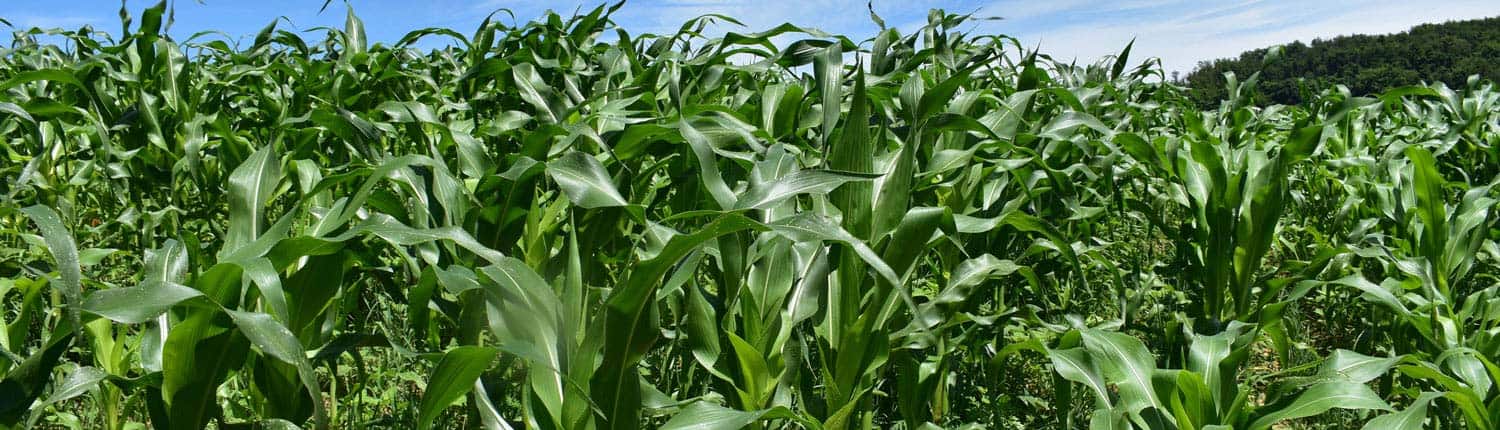
From Planting to Harvest, Wapsie Valley Corn (Cornmeal and Polenta) in the field:

After the field has been prepared by plowing and harrowing, the Wapsie Valley Corn is planted.

11 days after planting. Rotary hoeing the corn.

The corn is beginning to germinate.

5 1/2 weeks later. There has been lots of rain. This is the first chance we’ve had to cultivage the corn.
Because we are certified organic we do not use glyphosate (which you may know as RoundUp) to keep the weeds down in the corn field. Instead we rotary hoe and cultivate the corn.

The cultivator at work: the weeds between the rows are gone — without the use of chemicals.
Of course, you can see that growing organically, requires much more time in the field than growing corn conventionally.


We didn’t get a photo of the corn on the 4th of July. (Remember the old saying — knee high by the 4th of July?) But 9 days later, it is certainly quite tall.
Cornmeal and Polenta in the field!

Organic triumphs once more at the 2025 Washington County Fair.
Weatherbury’s Wapsie Valley Corn stalks placed 1st — beating all the GMO corn in the county!
This was the fifth year our stalks placed 1st — repeating their victories of 2022, 2021, 2017 and 2016.

When we pick seed corn, our object is to choose corn that will grow on the heartiest stalks possible .
The farmers look for plants where the corn ears hang lower on the stalk, the stalks are bigger diameter and have brace roots (2nd tier roots) which help to stabilize the corn stalk. We also select ears that point downward as they shed water.

Seed corn . Wapsie Valley corn has both a visual and flavor punch.

We harvested the Wapsie Valley Corn with our Gleaner Combine. The “Combine” is named because It combines four separate harvesting operations—reaping, threshing, gathering, and winnowing—into a single process. Combine harvesters are one of the most economically important labor-saving inventions, significantly reducing the fraction of the population engaged in agriculture. (If you discount maintenance time.)
You might ask why we use a 1980 combine. Smaller combines like ours have not been available for sale in the US since 1986 (although they are in Europe). This means we spend more time in the shop most years with our combine than in the field. Just a fact of life in the rolling hills of southwest PA.

While the corn is being combined, it is stored in the bin on the combine. Periodically, the corn is unloaded into a gravity wagon. Three sides of the wagon are slanted at about 45 degrees, which makes unloading the wagon easier — as it flows by gravity.
The carbon footprint of all our milled products is tiny because we grow the grains on our farm (as opposed to purchasing them from North Dakota as many small mills do). Our corn travels less than a mile from the field were it was grown to our mill.

Wapsie Valley Fields 2025
Wapsie Valley Corn Facts 2025
In 2025, Wapsie Valley Corn was grown in Independence Township on the farm known as the “Manchester Farm.” Founded in 1797, the farm has been certified organic since 2006. Manchester is listed in the Caldwell Atlas as a farmer, grain and stock raiser, also as a breeder of first class Saxon sheep (with 800 sheep). Previously a dairy, the farm most recently raised beef & pork and now offers horse boarding. Weatherbury has farmed this farm since 2024.
The corn was planted on three fields totaling 4.88 acres on May 16, 2025 .
In a “normal” year, we rotary hoe the corn twice and cultivate it twice. Due to rain, we rotary hoed the corn once and cultivated it once.
The Wapsie Valley Corn was harvested on November 23,2025.
At the 2025 Washington County Fair, Weatherbury’s Wapsie Valley Corn stalks placed 1st — beating all the GMO corn in the county! This was the fifth year our stalks placed 1st — repeating their victories of 2022,2021, 2017 and 2016. The corn ears and the jar of corn were not entered as the deer ate all of our 2024 corn.
For an illustrated explanation of how Weatherbury grains become flour, visit the from seed to flour page.
About Wapsie Valley Corn
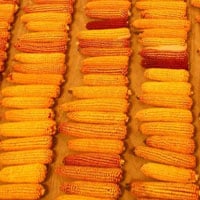
Wapsie Valley Seed Corn
Wapsie Valley Corn is an open-pollinated heirloom dent corn dating back to the 1850s. It produces ears of either all coppery red or all dark yellow kernels.
Corn is a spring planted crop. Because Weatherbury Farm is organic, we rotary hoe and cultivate the corn to lessen the impact of weeds.
Products Milled from Wapsie Valley Corn
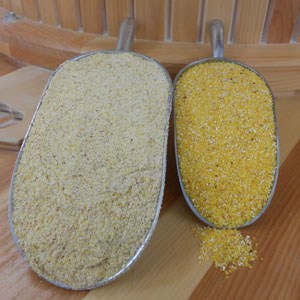
Organic Cornmeal and Polenta
Polenta and cornmeal are both milled from Wapsie Valley corn, which has both a visual and flavor punch.
During the past eight years, cornbread made with Weatherbury’s cornmeal and sifted pastry flour has won four first place ribbons and three second places at the county fair.
Health Benefits of Corn
Corn is a rich source of vitamins A,B,E and minerals (phosphorus, magnesium, manganese, zinc, iron and copper). With a high fiber content, it plays a significant role in preventing digestive ailments. It is rich in phytochemicals which provides protection against a number of chronic diseases, such as Alzheimer’s.
More Information
You can order cornmeal and polenta at our online shop(cornmeal) or online shop(polenta) either for our monthly on-farm pickup or to have your order sent to you.
To read more about polenta and cornmeal, please visit our products page.
More information on corn and other grains grown at Weatherbury Farm are on the grains we grow page.